

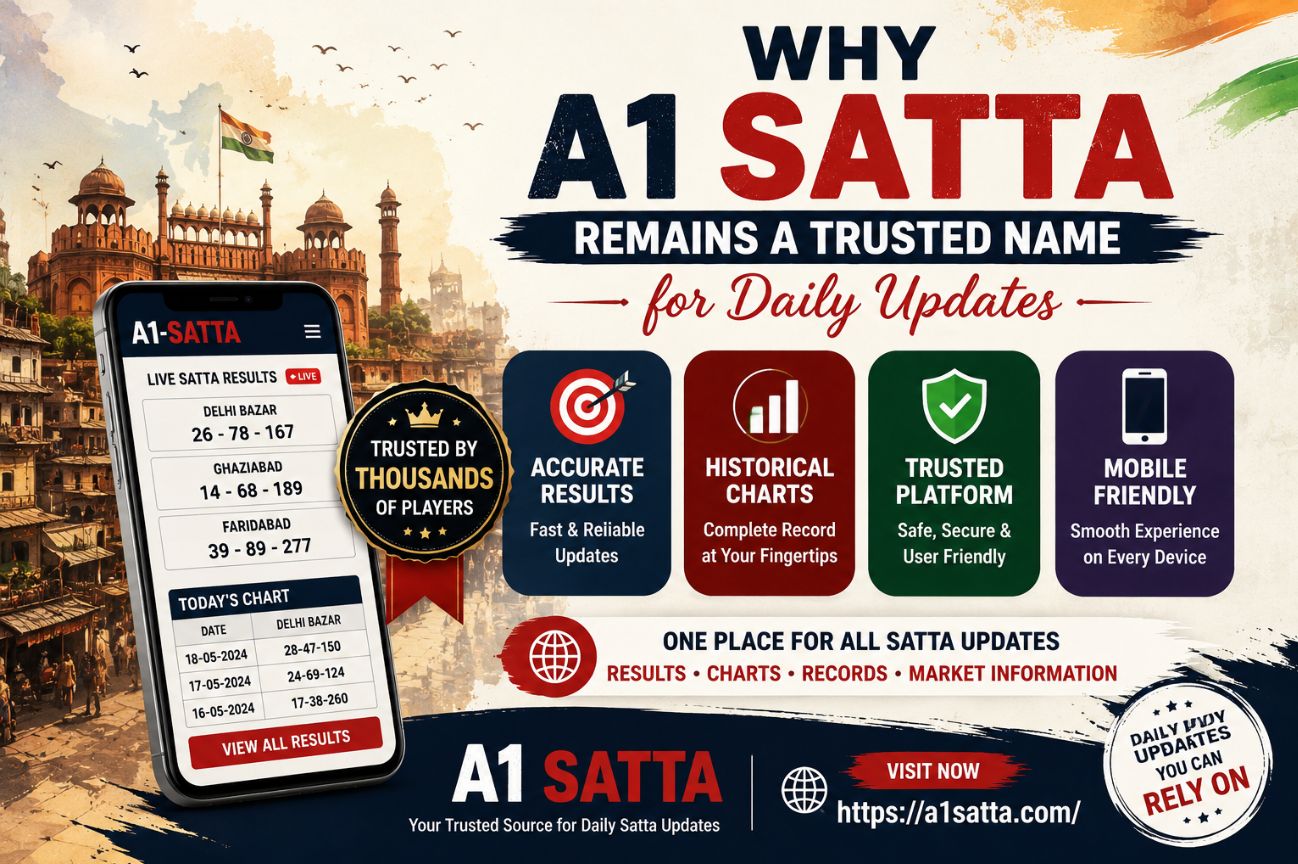
When people regularly visit a website for daily updates, consistency and clarity become important parts of the overall experience. A1 Satta website that publishes information frequently needs to maintain an organized structure so visitors can understand what has been updated and where they can find earlier information.
The title “Why A1 Satta Remains a Trusted Name for Daily Updates” reflects the importance of reliability in websites that provide frequently updated information. However, trust should not simply be assumed because a website publishes information every day. It is better understood through factors such as consistency, transparency, clear organization, accessible historical records, and responsible presentation.
For any information-based website, these elements can make daily updates easier to follow and historical information easier to locate.
What Makes a Daily-Update Website Useful?
Daily-update websites have a different responsibility from websites that publish occasional articles. Visitors generally expect information to be presented in a predictable and understandable way.
A useful daily-update platform should make it clear when information was published and should maintain an organized archive of previous updates. This creates continuity between today's information and earlier records.
Important characteristics include:
Consistent publication
Clear date and time information
Organized archives
Easy navigation
Readable page layouts
These features help visitors understand the information available on a website without having to search through unrelated pages.
The Importance of Consistent Updates
Consistency is one of the most important characteristics of a website that publishes information regularly. When visitors know that a website follows a predictable publishing schedule, they can navigate the platform more easily.
Consistency does not necessarily mean that every page needs to look identical. Instead, it means that information should follow a recognizable structure. Dates, headings, records, and updates should be presented in a way that visitors can understand.
For A1 Satta King website, maintaining this consistency can also reduce confusion when users move between current pages and historical archives.
Clear Presentation of Information
The way information is presented can have a significant effect on how easily it is understood. Even accurate information can become difficult to use if it is presented in a confusing format.
A clear website generally uses descriptive headings, logical sections, readable tables, and straightforward navigation. Important information should not be hidden among unnecessary text or excessive design elements.
For A1 Satta daily updates, clarity is particularly important because visitors may be checking the same type of information repeatedly.
Why Historical Records Matter
A strong information archive provides context to previously published material. Instead of removing older pages whenever new information becomes available, websites can preserve historical records in dedicated sections.
Historical archives can be organized by:
Date
Week
Month
Year
Category
This structure allows visitors to locate older information without navigating through every current update.
Maintaining an archive also demonstrates that a website treats its published information as an organized collection rather than a series of disconnected daily pages.
Easy Navigation Builds User Confidence
Navigation is another important part of a reliable information experience. Visitors should be able to move between current updates and older records without difficulty.
Simple menus, archive links, search functions, and date-based navigation can make a large website easier to understand.
When navigation is predictable, visitors spend less time searching for information and more time reading the information they came to find.
Accuracy and Responsible Information Practices
A1 Satta reputation is closely connected to how responsibly it presents information. Publishing frequently is not enough; information should also be clearly identified and appropriately contextualized.
A1 Satta should avoid presenting assumptions as facts. They should distinguish historical information from current information and avoid making unsupported claims.
This is particularly important for websites that deal with frequently changing data. A timestamp or publication date can help visitors understand when particular information was published.
Why Transparency Is Important
Transparency helps readers understand what they are looking at. An A1 Satta can improve transparency by clearly identifying its pages, dates, archives, and sources where applicable.
Rather than using exaggerated language, an information-focused website should allow the quality and organization of its content to speak for itself.
Useful transparency practices include:
Clearly dated updates
Accessible archive pages
Consistent terminology
Clearly identified historical information
Straightforward descriptions
These practices can contribute to a better overall information experience.
Understanding the Role of Daily Information
Daily information is generally most useful when it is presented within an organized system. A single update provides limited context, whereas a properly maintained archive shows how information has been recorded over time.
This is why information architecture matters. Visitors should be able to understand the relationship between current updates and historical pages without being encouraged to draw unsupported conclusions from past records.
The purpose of an archive is preservation and accessibility. It should not be presented as a guarantee of future outcomes.
How Websites Can Maintain Long-Term Reliability
Reliability is not something established by one page or one update. It develops through consistent information practices over time.
A1 Satta seeking to maintain a strong reputation should regularly review its page structure, correct obvious errors, maintain functioning archive links, and ensure that important information remains accessible.
Technical reliability is also important. Pages should load properly on mobile devices, links should work and navigation should remain understandable as the website grows.
User Experience and Accessibility
A1 Satta king provides daily information should consider different types of visitors. Some may access the website from desktop computers, while others may use smartphones.
Responsive design, readable typography, logical menus, and simple page structures can improve accessibility across devices.
The goal should be to make information available without unnecessary barriers. A visitor should not need extensive technical knowledge to locate a particular dated page or understand the structure of an archive.
Frequently Asked Questions
1. What makes a website reliable for daily updates?
Reliability can be supported by consistent publishing, clear dates, organized archives, transparent information practices and an easy-to-use website structure.
2. Why are historical archives important?
Historical archives preserve previously published information and make it easier for visitors to locate records from earlier dates.
3. How can visitors identify when an update was published?
Publication dates, timestamps, and clearly labeled archive sections can help visitors determine when information was added or updated.
4. Does historical information guarantee future outcomes?
No. Historical information records what was previously published. It should not be treated as a guarantee or prediction of future outcomes.
5. What should visitors look for when evaluating an information website?
Visitors can consider factors such as transparency, consistent updates, clear organization, accessible archives, and whether the website avoids unsupported claims.
Conclusion
A1 Satta is the subject of this article but the broader lesson about daily information websites is that trust should be evaluated through observable practices rather than assumed from a name or marketing statement.
Consistent updates, clearly presented information, accessible historical records, transparent dates, organized navigation and responsible communication all contribute to a better information experience.
For any website publishing frequent updates, maintaining these standards can help visitors understand current and historical information more efficiently. Ultimately, a reliable information environment is built through consistency, clarity, transparency, and responsible record keeping over time.